
Atomic DEX arbitrage
Two-leg and triangular routes across Raydium, Orca, Meteora, Lifinity, Phoenix and Pump AMM — all legs in a single transaction that either profits or reverts.

We are a team of engineers who have spent years designing, running and tuning arbitrage bots across centralized and decentralized exchanges. Today we build bespoke Solana arbitrage and MEV bots in pure Rust for traders and funds: real-time DEX scanning, pre-flight simulation and atomic Jito bundles. You own the code and the strategy; we do not guarantee profit.
What we build
Latency, simulation accuracy and inclusion strategy. Everything else is noise. These are the building blocks that go into every Solana bot we deliver.
Two-leg and triangular routes across Raydium, Orca, Meteora, Lifinity, Phoenix and Pump AMM — all legs in a single transaction that either profits or reverts.

Geyser / Yellowstone gRPC account streams keep an in-memory pool graph in sync so opportunities are seen the moment reserves move.

Dynamic tip bidding, bundle assembly and multi-region block engine submission to maximise inclusion odds without overpaying.
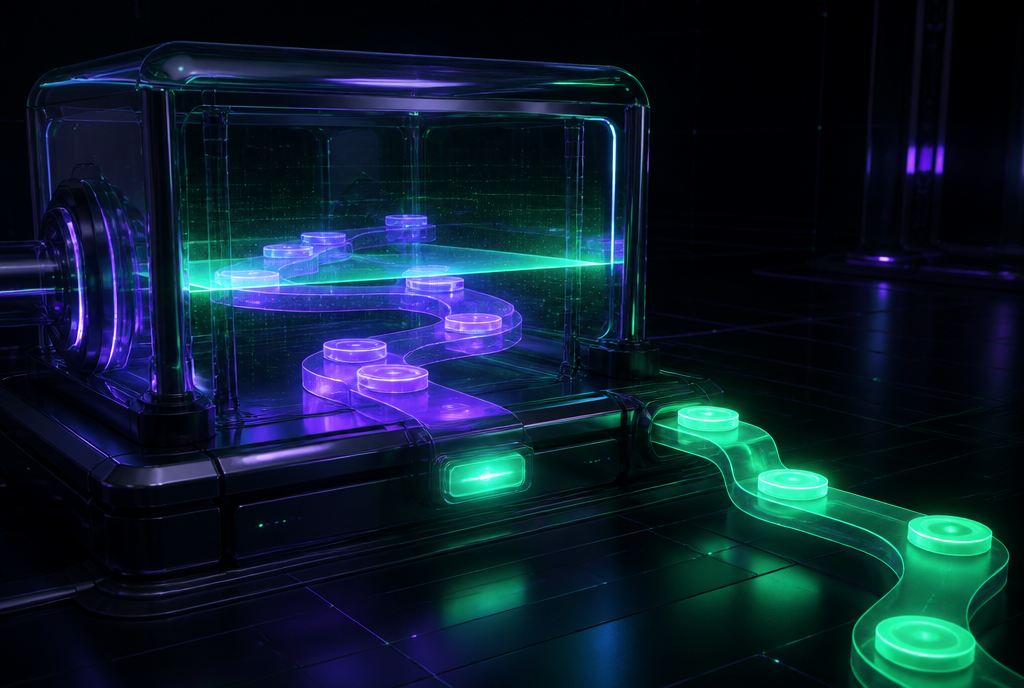
Every candidate route is simulated against the latest slot state. Negative expected value after fees, tips and slippage is dropped before signing.
Strategies are plug-in modules with their own risk parameters — your team can clone an existing one and ship a new edge in hours, not weeks.

Per-trade caps, daily loss limits, blacklists, compute-unit ceilings and a kill switch that flattens activity instantly.
Services
Each engagement is built on the same Rust engine. Pick the strategy you want to run and read how we build it, what it needs and what it costs.
Guide
A Solana arbitrage bot is an automated trading program that watches prices across Solana decentralized exchanges and, when the same token trades at different prices on two venues, buys on the cheaper one and sells on the more expensive one in a single atomic transaction. If the trade is no longer profitable by the time it lands, the transaction reverts and only the network fee is lost. That atomicity is why arbitrage on Solana is an engineering problem first and a capital problem second.

The bot streams account updates for liquidity pools on Raydium, Orca, Meteora, Lifinity, Phoenix and Pump AMM through a Yellowstone Geyser gRPC feed, keeps an in-memory graph of every pool and its reserves, and re-evaluates two-leg and triangular routes the moment a reserve changes. Each candidate route is simulated against the latest slot state; only routes with positive expected value after swap fees, priority fees, Jito tips and slippage are signed and submitted.
Sub-second block times, low base fees and a rich DEX ecosystem mean price discrepancies appear and disappear thousands of times a day. Jito bundles let a bot submit its arbitrage as an atomic bundle that is either included in full or not at all, with a tip that competes for block space. Compared with Ethereum, the edge on Solana comes less from gas auctions and more from data latency, simulation accuracy and how fast a Rust engine can turn a pool update into a signed transaction.
Arbitrage is one type of MEV (maximal extractable value). A Solana MEV bot may also run back-running, liquidation or new-pool sniping strategies, but the infrastructure is the same: private RPC access, Geyser streaming, a route solver, Jito bundle submission and strict risk guards. We build both, and most clients start with DEX-to-DEX arbitrage because it is fully atomic and the easiest to reason about.
Open-source arbitrage scripts written in JavaScript or Python lose to production bots on latency, not on ideas. A competitive Solana arbitrage bot is written in Rust, runs next to its RPC and Geyser nodes, simulates before signing, bids tips dynamically, caps exposure per trade and per day, and ships with monitoring so you know exactly why a route won or lost. That is the bar we build to, and the client always owns the resulting code. Results still depend on capital, competition and market conditions; nothing here is a profit guarantee.
Architecture
Every bot we deliver ships with documented modules, configuration examples, a dry-run mode and a full deployment guide. No licence server, no phone-home telemetry, no obfuscated binaries — you own and control every line.
Before any project starts, we walk you through a live screen-share of bots we have built and run on mainnet, so you can judge the quality of our work first-hand.
Experience
Our team has designed, deployed and operated arbitrage and MEV bots across centralized and decentralized exchanges — from CEX/DEX spread capture to atomic DEX-to-DEX routes on Solana. That hands-on experience goes into every bot we build for clients. You bring the capital and the strategy; we bring the engineering.
Every engagement is delivered as a full Rust repository with documentation — no obfuscation, no licence server.
Use the form below. Describe the edge you want to trade, your capital range, infrastructure and timeline — we reply to every serious inquiry.
We screen-share bots we have built running on mainnet, review your requirements and send a fixed-scope quotation.
We build in Rust, test in dry-run and on mainnet with small size, then hand over the repository, documentation and deployment setup.
Custom development
We build bespoke Solana bots in Rust for traders and funds, drawing on years of hands-on experience operating arbitrage strategies. We deliver the software and documentation; you run it on your own RPC, Geyser and hosting infrastructure. Projects typically range from $25,000 to $500,000 depending on complexity, latency and infrastructure. As always, we deliver engineering — never a profit guarantee.
We write the bot around the edge you want to trade — routes, venues, capital size and risk limits are yours.
Every build is delivered as a full Rust repository with documentation. No obfuscation, no licence server.
Docker templates, metrics, alerts and a dry-run mode are included — you run it on your own RPC nodes, Geyser feeds and hosting.
FAQ
Use the form above to describe your strategy, book a scoping call and see our work live. We deliver the engineering; you bring the capital and the edge — we do not guarantee profit.
Open the project form